
Mobile Rehab provides specialist home physiotherapy in Reading for individuals recovering from stroke and complex neurological conditions. Home-based rehabilitation is particularly effective following stroke because it enables therapy to be delivered within the patient’s real environment, ensuring that improvements in strength, balance, and mobility directly transfer into everyday functional tasks.
This case study outlines a structured post-stroke rehabilitation programme delivered entirely within the patient’s home in Reading following discharge from hospital.
Home Physiotherapy in Reading – Post Stroke Rehabilitation Case Study
Patient Background
A male patient in his late 60s was referred for private home physiotherapy in Reading following an acute right hemispheric ischaemic stroke. The stroke resulted in significant left-sided weakness affecting both upper and lower limb function, along with reduced coordination, impaired motor control, and marked balance disturbance.
Following discharge from hospital, the patient was significantly functionally limited. He required assistance for bed mobility, sit-to-stand transfers, and all walking activity, relying heavily on a walking frame and caregiver support for safety.
The patient also presented with a strong fear of falling, which had developed following the stroke and was significantly limiting participation in rehabilitation activities. This fear was contributing to overly cautious movement patterns, reduced weight-bearing through the affected limb, and avoidance of independent mobility attempts.
The main rehabilitation goals were to restore functional independence, improve walking ability, reduce reliance on carers, and significantly improve safety and confidence within the home environment.


Initial Home Physiotherapy Assessment in Reading
A comprehensive neurological physiotherapy assessment was carried out in the patient’s home in Reading to assess functional ability in a real-world environment rather than a clinical setting.
The assessment was completed across multiple functional areas of the home including the living room, hallway, kitchen, and bathroom in order to fully evaluate how the patient managed daily movement demands.
On observation, the patient demonstrated significant left-sided weakness with reduced voluntary motor control and poor coordination during functional movement tasks. There was marked difficulty with weight transfer onto the affected limb, resulting in compensatory movement strategies and reduced efficiency during all mobility tasks.
Postural control was significantly impaired, particularly during standing transitions, with visible instability and delayed balance reactions. The patient required external support for most upright activities.
Gait analysis revealed a slow, asymmetrical walking pattern with reduced step length on the affected side, poor foot clearance, and difficulty initiating and controlling turning movements. Furniture reliance was heavily present, indicating reduced confidence and increased falls risk.
Treatment Plan – Home-Based Neurological Rehabilitation Programme
A structured rehabilitation programme was developed and delivered over a 12-week period, fully embedded within the patient’s home environment to ensure real-world functional carryover.
Functional Mobility and Transfer Retraining
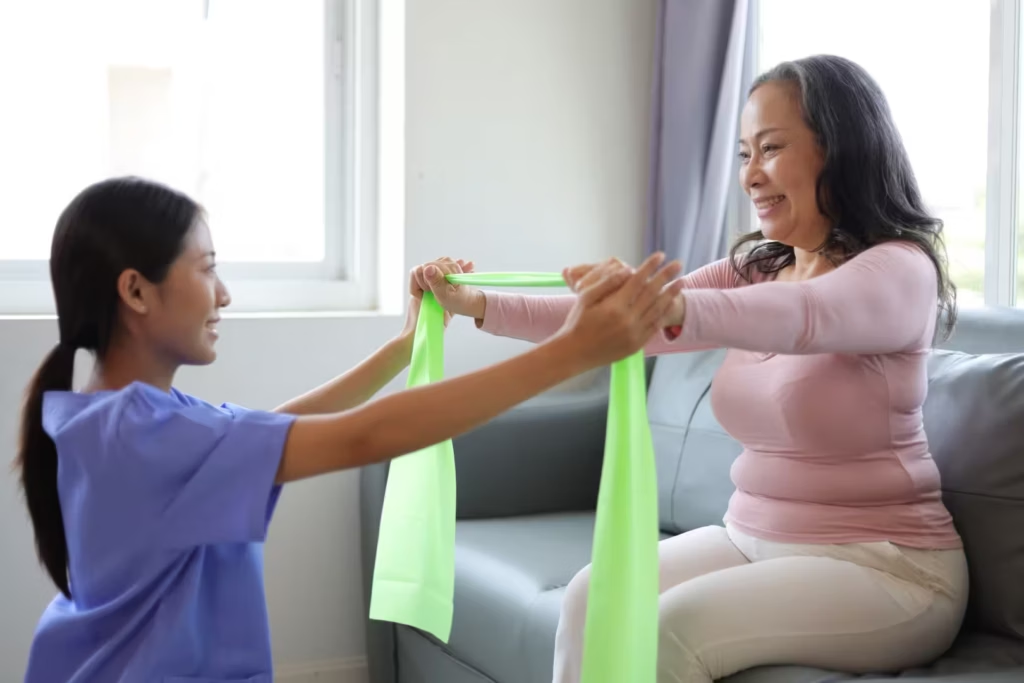
Initial rehabilitation focused on restoring independence with basic movement tasks. This included intensive sit-to-stand practice from multiple surfaces of varying heights, bed mobility retraining, and repeated transfer practice between key household locations.
Each task was broken down into controlled movement phases to improve motor control and reduce compensatory patterns. Particular emphasis was placed on improving symmetrical weight distribution and encouraging active engagement of the affected limb during transitions.
Gait Re-Education and Walking Rehabilitation
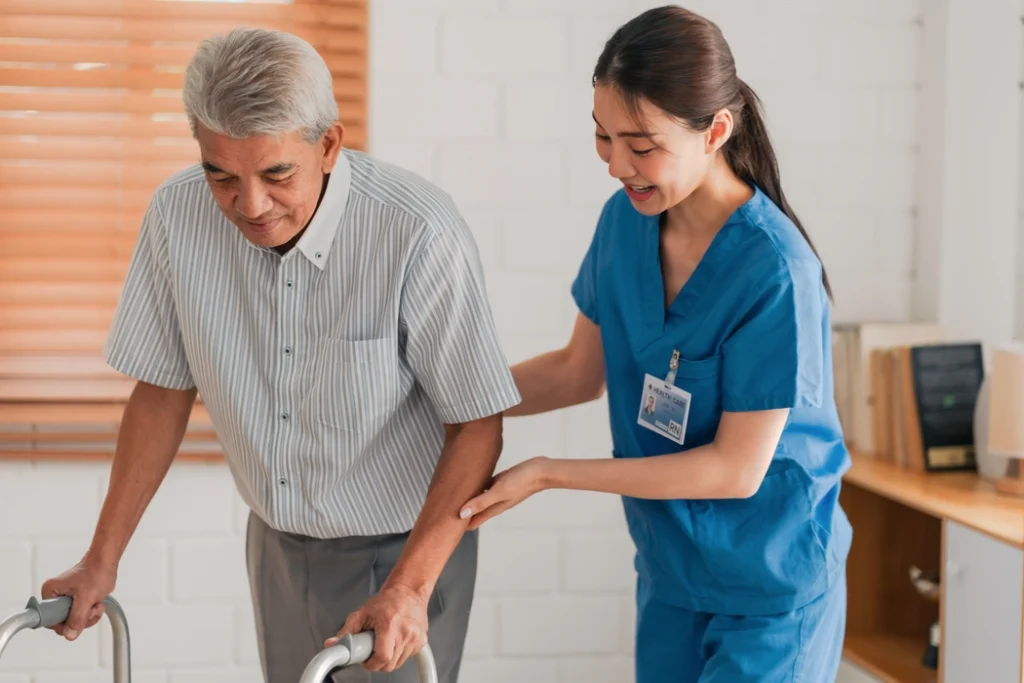
Walking retraining formed a core component of rehabilitation. The patient initially required a walking frame for safety and stability. Therapy focused on improving step symmetry, increasing weight transfer through the affected lower limb, and reducing upper limb dependency on the walking aid.
Walking practice was deliberately completed in real home environments, including narrow hallways, doorway transitions, and turning areas, to ensure that improvements were directly transferable to daily life.
Turning mechanics were specifically addressed as this was identified as a high-risk movement for instability and loss of balance.

Balance and Postural Control Training
Balance rehabilitation progressed from static standing stability work to dynamic functional balance tasks. This included controlled weight shifting, reaching outside of the base of support, and maintaining stability during real-life activities such as kitchen-based tasks and object handling.
These exercises were integrated into daily routines to ensure high repetition and functional relevance rather than isolated exercise-based training.
Upper Limb Neurological Rehabilitation
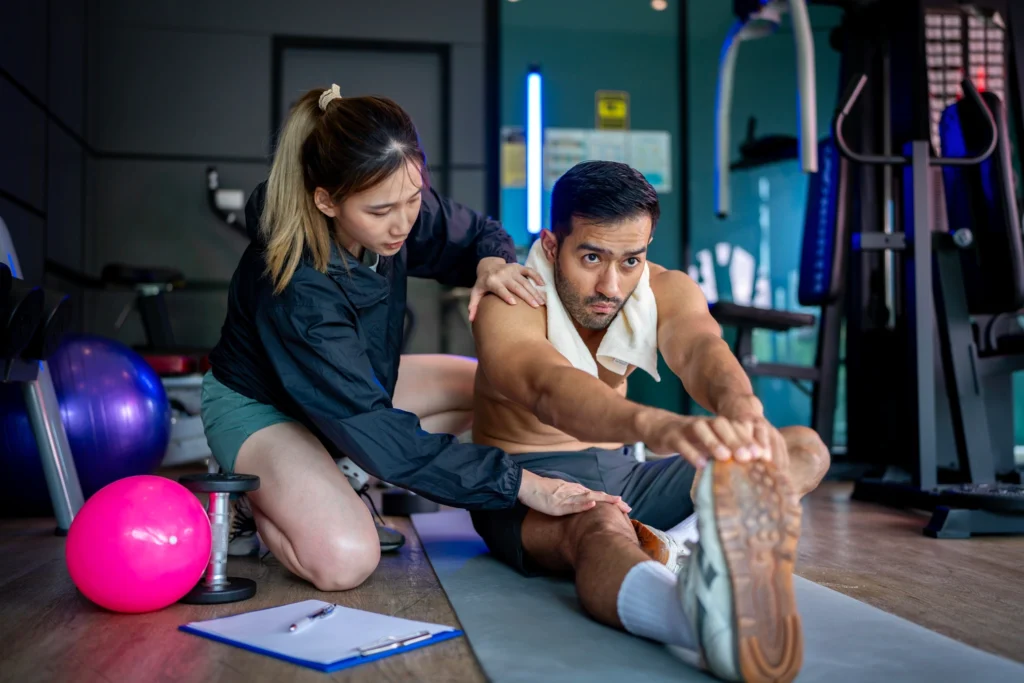
The affected upper limb was incorporated into rehabilitation through assisted reaching tasks, bilateral movement training, and functional integration into daily activities such as dressing, grooming, and household tasks.
The aim was to encourage neuroplastic recovery through repetition, task specificity, and functional use rather than isolated strengthening alone.
Our services also extend throughout Reading, allowing individuals in the area to access specialist Private Physiotherapy care. Additionally, our Surrey-based Physiotherapists cater to clients across the region, bringing our expertise directly to you.

Falls Prevention and Education
A structured falls prevention programme was implemented, involving both the patient and family members.
This included education on safe movement strategies, fatigue management, appropriate use of walking aids, and environmental modification within the home to reduce trip hazards.
Carers were also educated on how to provide support safely without reducing patient independence, ensuring an appropriate balance between safety and rehabilitation progression.
Progress and Outcomes (12 Weeks)
Over the course of the 12-week rehabilitation programme, the patient demonstrated consistent functional improvement.
There was a clear improvement in indoor mobility with reduced assistance required for walking and transfers. Movement became more controlled, with improved weight transfer through the affected limb and reduced reliance on external support.
Fear of falling reduced significantly, resulting in improved participation in rehabilitation activities and increased willingness to attempt independent movement.
Overall functional independence improved, with the patient able to complete a greater number of daily activities safely within the home environment.
Clinical Summary
This case demonstrates the effectiveness of home physiotherapy in Reading following stroke. Delivering rehabilitation in the patient’s own environment allowed for highly functional, task-specific training that directly translated into improved independence and safety in daily life.
Home-based neurological physiotherapy is particularly effective in stroke rehabilitation due to its ability to combine repetition, real-world movement practice, and contextual learning within the patient’s everyday
Recognised Health Insurance Providers


Our Registrations


