Mobile Rehab provides specialist home physiotherapy in Richmond upon Thames for individuals living with musculoskeletal conditions such as knee osteoarthritis. Home-based physiotherapy is particularly effective for knee osteoarthritis as it allows treatment to focus on functional movement patterns such as walking, stair negotiation, sit-to-stand transfers, and daily household mobility tasks within the patient’s real environment.
This case study outlines a structured knee osteoarthritis rehabilitation programme delivered entirely within the patient’s home in Richmond upon Thames.
Home Physiotherapy in Richmond upon Thames – Knee Osteoarthritis Rehabilitation Case Study
Patient Background
A female patient in her late 60s was referred for private home physiotherapy in Richmond upon Thames due to progressively worsening knee pain and stiffness associated with osteoarthritis.
The patient reported a gradual decline in mobility over several years, with symptoms becoming more limiting in recent months. Pain was most noticeable during weight-bearing activities such as walking, standing from a seated position, and climbing stairs.
Morning stiffness was a significant feature, with reduced mobility in the early part of the day that improved slightly with gentle movement but returned after prolonged activity.
The patient also reported reduced walking distance, increased reliance on support surfaces within the home, and difficulty maintaining independence with daily activities. The primary rehabilitation goals were to reduce pain, improve knee mobility, strengthen supporting musculature, restore functional walking ability, and maintain independence in daily activities.
Initial Home Physiotherapy Assessment in Richmond upon Thames
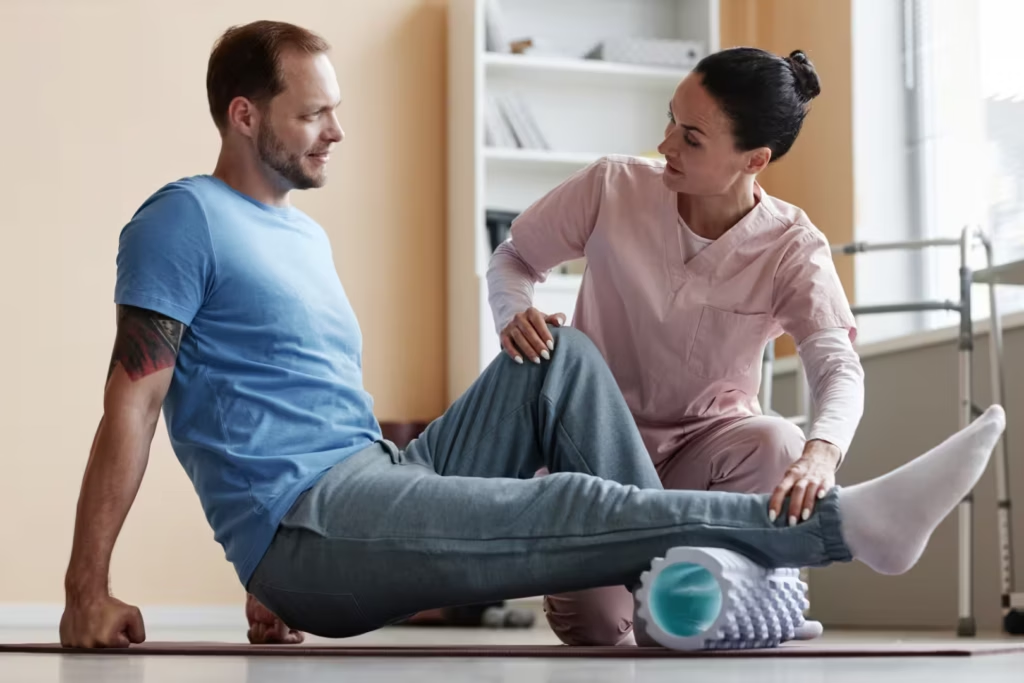
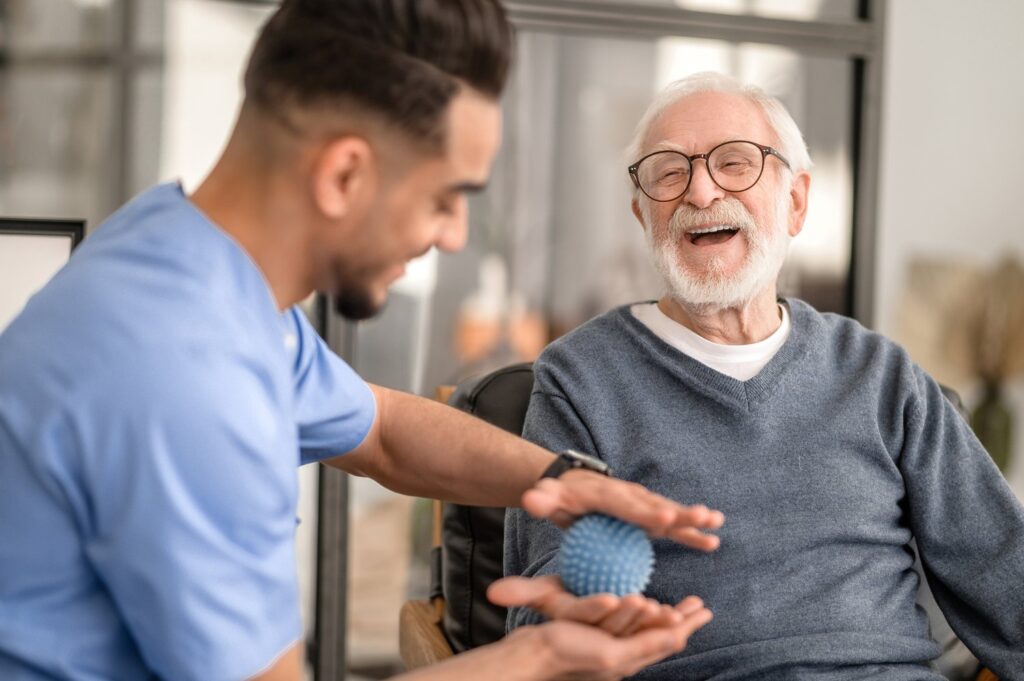
A comprehensive musculoskeletal physiotherapy assessment was completed within the patient’s home in Richmond upon Thames to evaluate functional limitations in a real-world environment. Assessment included observation of walking pattern, sit-to-stand ability, stair negotiation (where applicable), joint range of motion, and functional strength testing.
On assessment, the patient demonstrated reduced knee flexion and extension range of motion, with stiffness contributing to restricted movement during both loading and unloading phases of gait. There was noticeable quadriceps weakness, contributing to reduced knee stability during weight-bearing tasks. This resulted in a compensatory walking pattern characterised by reduced stride length, reduced weight acceptance through the affected limb, and a mild antalgic gait.
Sit-to-stand transfers required increased upper limb assistance, with reduced eccentric control when lowering into seated positions.
Stair negotiation was particularly challenging, with the patient demonstrating reduced confidence and increased reliance on handrail support.
Treatment Plan – Home-Based Knee Osteoarthritis Rehabilitation Programme
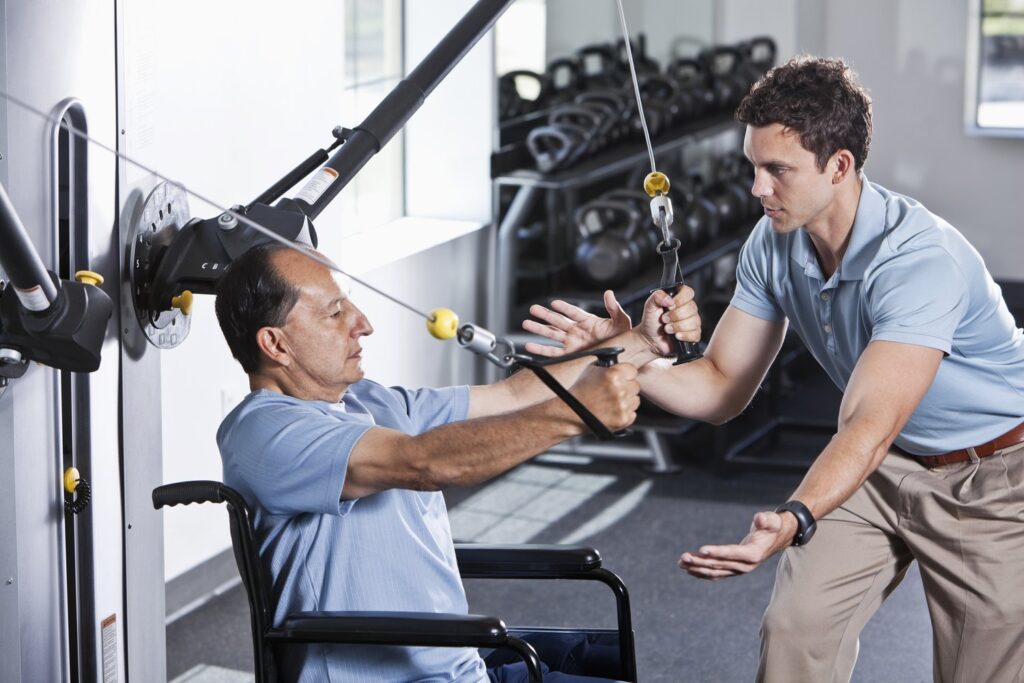
A structured rehabilitation programme was implemented within the home environment, focusing on pain reduction, mobility restoration, strengthening, and functional improvement.
Pain Management and Load Modification
Initial treatment focused on managing pain and reducing joint irritation. Education was provided regarding activity pacing, joint protection strategies, and the importance of maintaining movement without overloading the knee joint.
Advice was also given on balancing rest and activity to avoid stiffness while preventing symptom flare-ups.

Knee Mobility and Range of Motion Exercises
Gentle mobility exercises were introduced to improve knee flexion and extension. These exercises were designed to reduce stiffness and improve functional movement during walking and transfers.
Controlled movement within pain-free ranges was prioritised to avoid aggravation of symptoms while promoting gradual improvement in joint mobility.
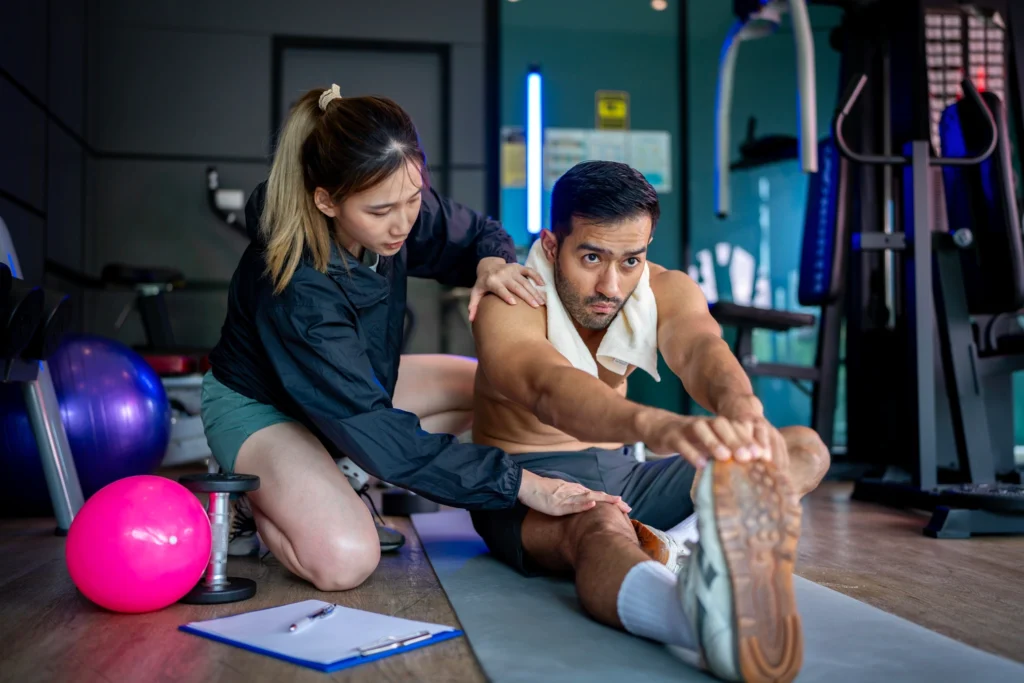
Strengthening Programme (Quadriceps and Lower Limb Control)
A progressive strengthening programme was introduced focusing on the quadriceps, hamstrings, and hip stabilisers.
Sit-to-stand exercises formed a key component of strengthening, with gradual progression from higher to lower seating surfaces to increase load tolerance.
Additional exercises targeted controlled knee extension strength to improve stability during walking and standing tasks.

Gait Re-Education and Walking Improvement
Walking retraining focused on improving step length, weight transfer through the affected limb, and reducing compensatory gait patterns.
The patient practised walking within the home environment, including corridors and transitional spaces, to improve confidence and functional mobility.
Attention was also given to improving symmetry and reducing reliance on upper limb support.
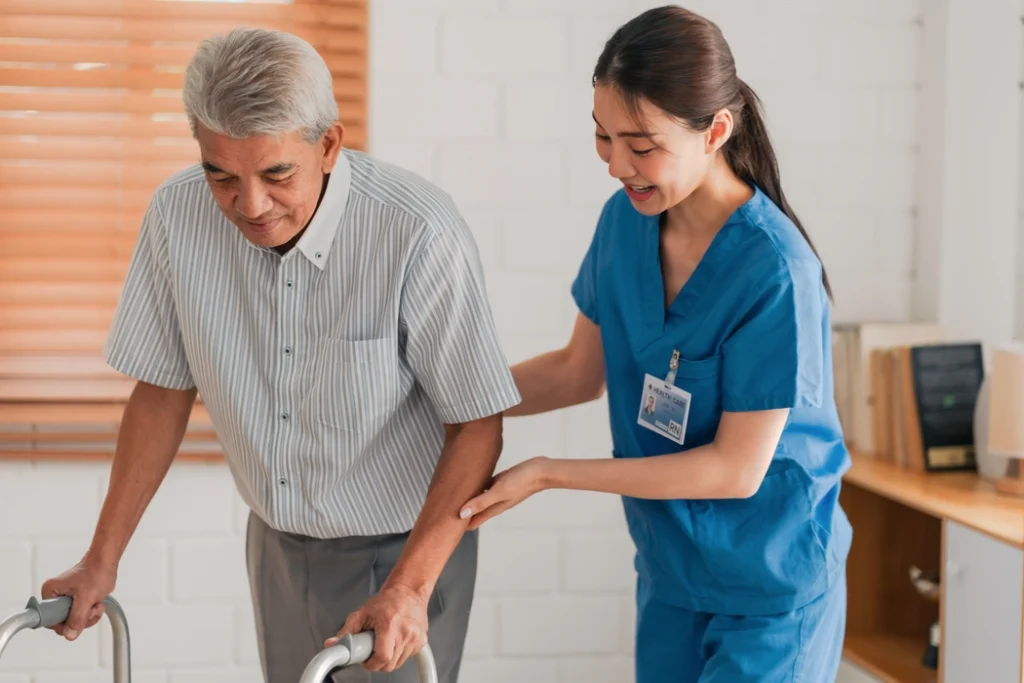
Functional Task-Based Rehabilitation
Rehabilitation was closely integrated into functional daily activities within the home environment. This included practising sit-to-stand transfers, safe turning movements, and controlled stair negotiation where applicable.
The goal was to ensure that improvements in strength and mobility translated directly into improved independence in everyday life.
Progress and Outcomes
Over the course of rehabilitation, the patient demonstrated consistent improvement in knee function and overall mobility.
Pain levels reduced during both rest and movement, particularly during walking and sit-to-stand transitions. Knee stiffness improved, especially in the morning, allowing for easier initiation of movement.
Strength improvements led to better control during standing and walking tasks, with reduced reliance on upper limb support during transfers.
Walking distance increased, and the patient demonstrated improved confidence in performing daily activities with reduced discomfort.
Clinical Summary
This case demonstrates the effectiveness of home physiotherapy in Richmond upon Thames for managing knee osteoarthritis. Delivering rehabilitation within the home environment allowed treatment to be directly integrated into functional movement patterns, improving real-world outcomes and independence.
Home-based physiotherapy is particularly effective for knee osteoarthritis due to the importance of strength, mobility, and functional load management in daily activities such as walking, stair use, and transfers.
Recognised Health Insurance Providers


Our Registrations


