Mobile Rehab provides specialist home physiotherapy in Guildford for individuals suffering from musculoskeletal (MSK) conditions, including shoulder pain, rotator cuff dysfunction, and movement restriction affecting daily function. Home-based physiotherapy is particularly beneficial for shoulder conditions as it allows rehabilitation to be directly integrated into everyday movement patterns such as dressing, reaching, lifting, and household activities.
This case study outlines a structured shoulder rehabilitation programme delivered entirely within the patient’s home in Guildford.
Home Physiotherapy in Guildford – Shoulder Musculoskeletal (MSK) Rehabilitation Case Study
Patient Background
A male patient in his late 50s was referred for private home physiotherapy in Guildford due to persistent right shoulder pain that had gradually worsened over several months.
The pain was initially mild but had progressed to the point where it was significantly affecting daily function, particularly overhead reaching, lifting objects, dressing, and activities involving sustained shoulder use.
The patient reported difficulty sleeping due to shoulder discomfort, particularly when lying on the affected side, and noted increasing stiffness in the morning and after periods of inactivity.
There was no single traumatic incident; symptoms were consistent with a gradual onset rotator cuff-related shoulder dysfunction combined with movement restriction and muscular imbalance.
The primary rehabilitation goals were to reduce pain, restore shoulder mobility, improve strength and stability, and return to normal functional use of the upper limb.

Initial Home Physiotherapy Assessment in Guildford
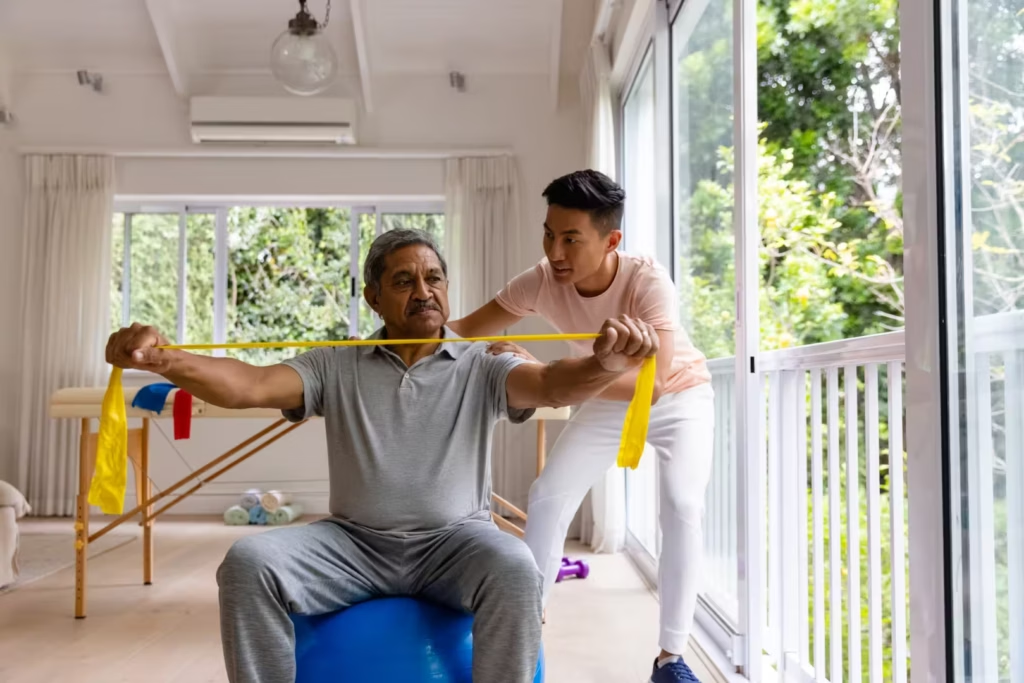
A detailed musculoskeletal physiotherapy assessment was completed within the patient’s home in Guildford to evaluate shoulder function in real-world contexts.
Assessment included observation of active and passive range of motion, functional reaching tasks, strength testing, and movement patterns during everyday activities such as lifting objects, reaching cupboards, and dressing.
On assessment, the patient demonstrated reduced active shoulder flexion and abduction, with pain limiting movement beyond mid-range. External rotation was particularly restricted and associated with discomfort.
There was clear weakness in the rotator cuff musculature, along with compensatory shoulder elevation and scapular substitution during attempted overhead movement.
Scapular control was reduced, resulting in inefficient movement mechanics and increased strain on surrounding structures during functional use.
Treatment Plan – Home-Based Shoulder Rehabilitation Programme
A structured rehabilitation programme was implemented within the home environment, focusing on pain reduction, mobility restoration, and progressive strengthening.

Pain Management and Load Modification
Initial treatment focused on reducing pain and preventing further aggravation of symptoms. Education was provided regarding activity modification, particularly avoiding sustained overhead positions and heavy lifting during the early stages of rehabilitation.
Strategies were introduced to manage pain during daily activities, including pacing and optimal positioning during functional tasks.

Shoulder Mobility and Range of Motion Restoration
Gentle mobility exercises were introduced to restore shoulder range of motion while respecting pain limits. This included assisted active movements into flexion, abduction, and external rotation, progressing gradually as tolerance improved.
Mobility work was closely monitored to avoid compensatory movement patterns such as shoulder elevation or trunk leaning.

Rotator Cuff Strengthening
Progressive strengthening of the rotator cuff muscles was introduced once pain levels allowed.
Exercises focused on controlled activation of shoulder stabilisers to improve joint support during movement. Emphasis was placed on low-load, high-control exercises to rebuild endurance and stability.
Strengthening was progressed gradually in line with functional tolerance.
Scapular Stability and Control Training
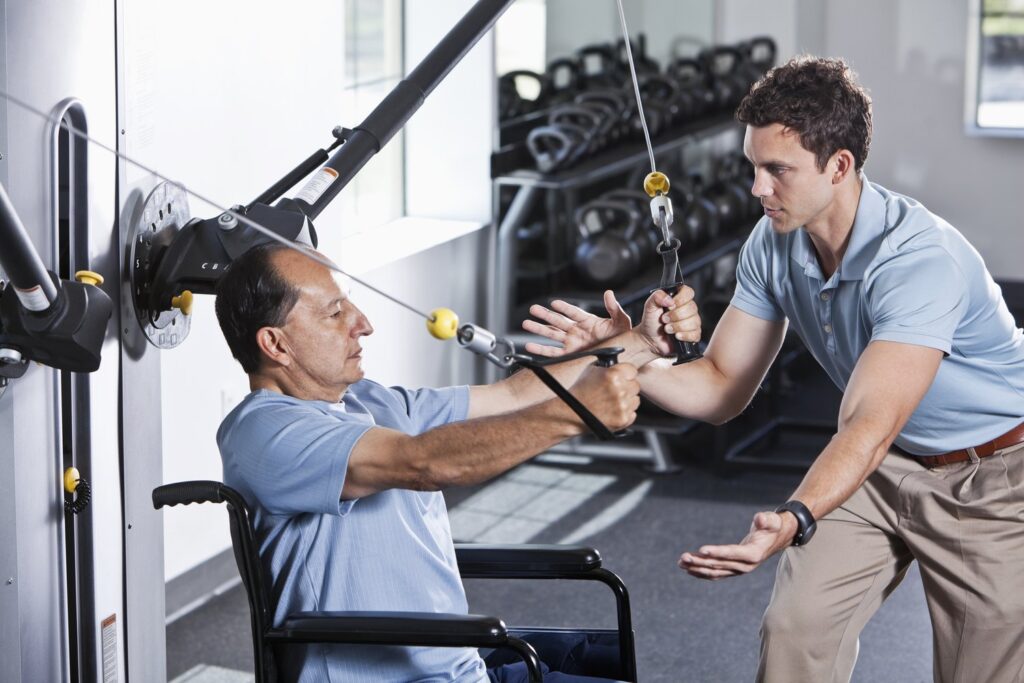
Scapular control was a key focus of rehabilitation due to its importance in shoulder mechanics.
Exercises were introduced to improve scapular positioning, stability, and coordination during arm movement. This helped reduce compensatory movement patterns and improved overall shoulder efficiency.
Training was integrated into functional movement patterns to improve carryover into daily activities.

Functional Task-Based Rehabilitation
Rehabilitation was closely linked to real-life activities within the home environment.
This included reaching into cupboards, lifting light household objects, dressing movements, and controlled overhead tasks as tolerance improved.
This functional approach ensured that improvements in mobility and strength translated directly into improved daily function.
Progress and Outcomes
Over the course of rehabilitation, the patient demonstrated significant improvements in shoulder function and pain reduction. Pain levels reduced considerably during both rest and movement, allowing improved sleep quality and reduced discomfort during daily activities.
Shoulder range of motion improved, particularly in flexion and abduction, with reduced compensatory movement patterns observed during functional tasks. Strength and control of the shoulder complex improved, allowing for more efficient and pain-free use of the upper limb.
Overall functional ability improved significantly, with the patient returning to most normal daily activities without restriction.
Clinical Summary
This case demonstrates the effectiveness of home physiotherapy in Guildford for shoulder musculoskeletal conditions. Delivering rehabilitation within the home environment allowed treatment to be directly integrated into functional movement patterns, improving real-world outcomes.
Home-based MSK physiotherapy is particularly effective for shoulder conditions due to the importance of functional retraining in daily activities such as reaching, lifting, and dressing.
Recognised Health Insurance Providers


Our Registrations


